
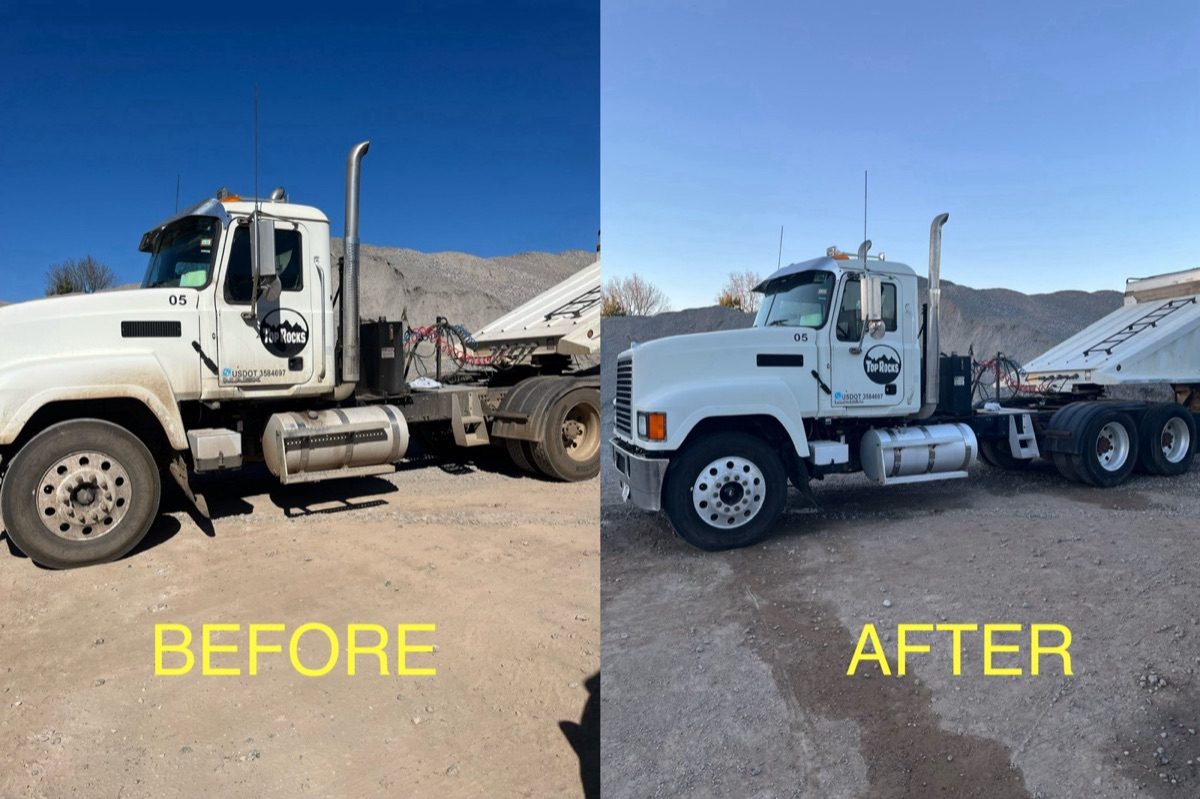
There is no honest wash interval that fits every fleet. A local delivery van, an oilfield truck, and a highway tractor do not collect the same buildup or carry the same presentation requirements.
Start with the route, not the calendar
Look at where the equipment runs, what it carries, where it parks, and how often customers see it. Mud, road film, insects, dust, organic buildup, and job-site residue accumulate at different rates.
Four scheduling triggers
- Appearance. Branded vehicles are moving signs. Wash before buildup makes the fleet look neglected.
- Inspection and maintenance. Cleaning can make leaks, damaged parts, labels, and inspection points easier to see. It is not a substitute for inspection.
- Operating season. Rain, pollen, dust, construction routes, and winter road conditions can change the useful interval.
- Customer or contract standards. Some sites and customers expect equipment to arrive in a defined condition.
A practical starting point
High-visibility or high-soil fleets may need weekly or biweekly attention. Many commercial fleets start monthly and adjust after seeing how the equipment looks at the end of the cycle. Lower-use equipment may fit quarterly or seasonal work.
Schedule the first wash, inspect the fleet at two and four weeks, and use the real buildup to set the next interval.
What to send for a recurring quote
- Unit count and mix
- Parking location and operating hours
- Typical return-to-yard window
- Water and drainage information
- Photos of normal buildup
- Desired weekly, monthly, quarterly, or seasonal frequency
Need the job quoted?
Send the location, scope, and best callback number. Travis will tell you what can be priced from the details and what needs an on-site look.