
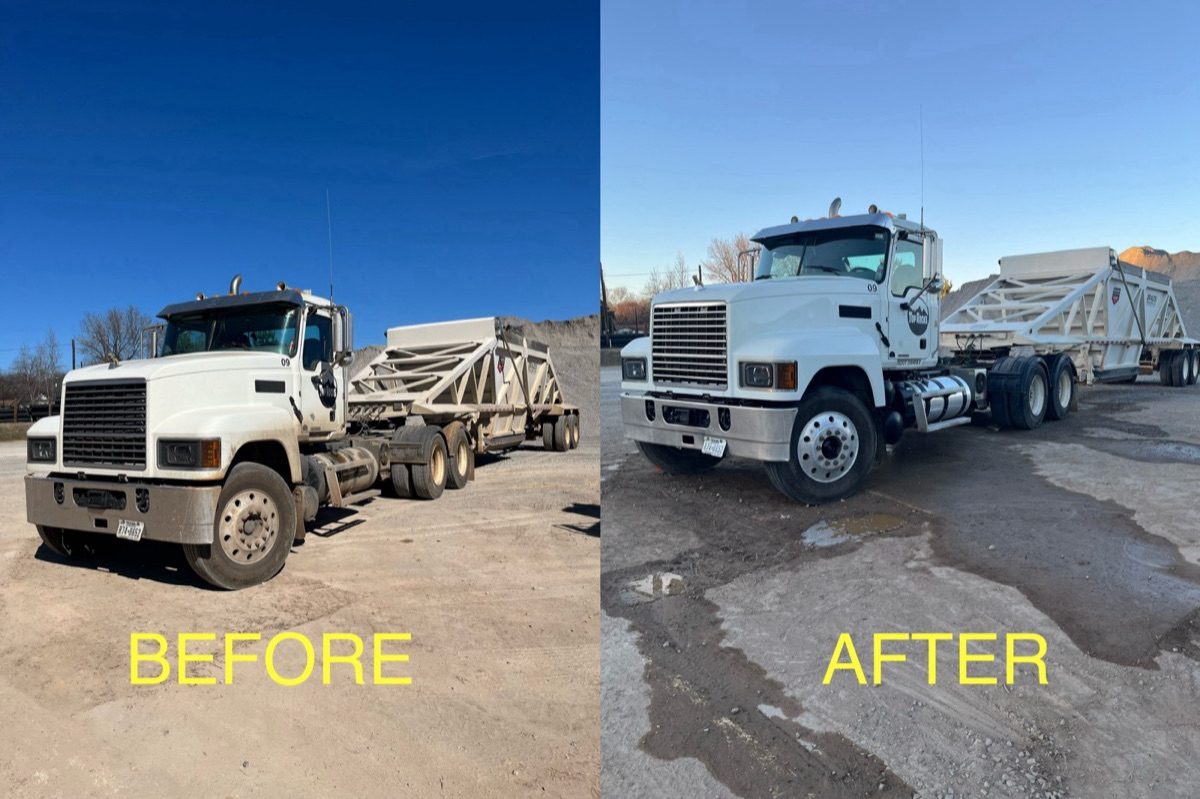
A fleet quote gets more useful when it starts with how the trucks actually operate. Travis does not just need a total vehicle count. He needs to know what is in the yard, when it is there, and what condition it is normally in.
1. Count each type of unit
List semis, trailers, dump trucks, tankers, vans, pickups, buses, or other equipment separately. Different unit types have different published base rates and different wash requirements.
2. Give the return-to-yard window
Say when the first units return, when most of the fleet is parked, and when vehicles must leave again. That lets the wash plan protect route time instead of creating another stop for drivers.
3. Show normal buildup
Send wide photos of the fleet and closer photos of the road film, mud, grease, insects, or job-site residue. A clean unit in a sales photo does not show what a normal service visit will require.
4. Explain the site
- Exact yard or job-site address
- Where units can be staged
- Water availability
- Drainage and surface conditions
- Gate, traffic, lighting, or access limits
- An on-site contact for the service window
5. Choose a starting frequency
Ask for one-time, weekly, monthly, quarterly, or seasonal pricing. If you are unsure, start with one wash and inspect the real buildup after two and four weeks before locking in a schedule.
“We have 8 semis and 12 trailers in Longview. Most are back after 7 p.m. We want a one-time wash and a monthly option.”
Need the job quoted?
Send the location, scope, and best callback number. Travis will tell you what can be priced from the details and what needs an on-site look.